
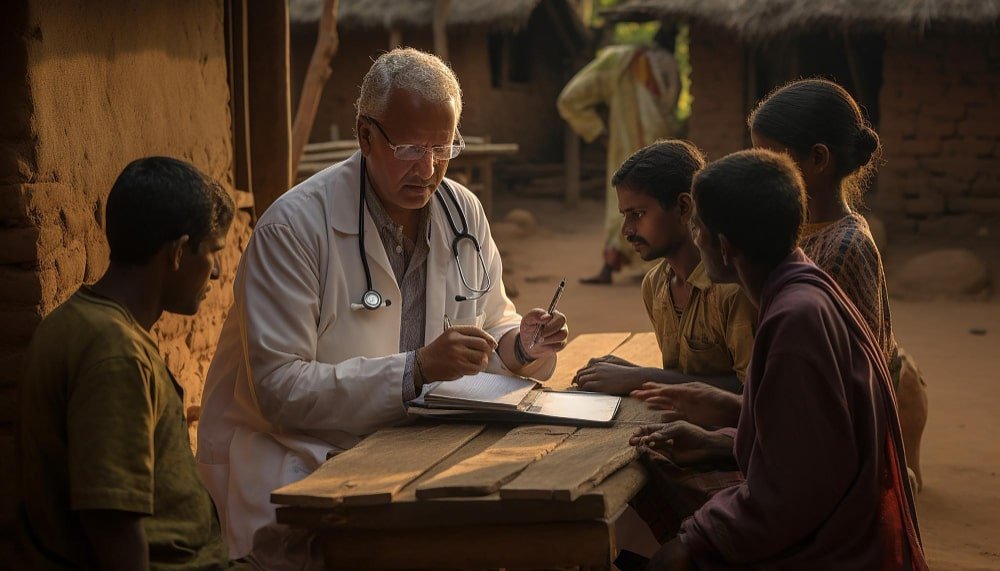
In India’s villages and remote areas, healthcare is not always a right sometimes it’s a struggle. Long distances, lack of hospitals, and limited medical awareness create a gap that fake doctors take full advantage of. These quacks blend in easily: they act confident, offer fast solutions, and provide cheap treatment but behind these promises lie danger, exploitation, and lifelong health complications.
This is the untold reality of how fake doctors prey on rural communities.
Their impact goes far beyond wrong medicines.
They steal trust. They play with lives.
And they grow stronger when people don’t know the truth.
Let’s uncover how this hidden system works and why villagers often fall into their trap.
1. Lack of Healthcare Access Creates Opportunity for Quacks
Most rural communities do not have:
- Nearby hospitals
- Qualified doctors
- Emergency services
- Diagnostic labs
- Reliable transport
When someone falls sick late at night or during emergencies, villagers cannot afford to travel 20–50 km to a town hospital.
Fake doctors know this and they position themselves as the “easiest and fastest option.”
Why rural families choose them:
- They are close to the village
- They are available at odd hours
- They charge less
- They speak the local language
- They earn trust through familiarity
This convenience becomes the first step into danger.
2. Fake Doctors Pretend to Be “Multi-Specialists”
Real doctors specialize, but quacks act like they can treat everything.
Their claims often include:
- “I can cure any disease.”
- “I have 20 years experience.”
- “I learned from a big doctor in the city.”
- “I know shortcuts for quick results.”
Villagers, unaware of medical standards, often believe these claims.
But the truth:
Most fake doctors have:
- Zero medical education
- Only basic first-aid knowledge
- Experience from working at pharmacies
- Half-learned information from Google
- Random training from other quacks
They treat:
- Fever
- Women’s health issues
- Children’s diseases
- Bones and fractures
- Snake bites
- Heart problems
- Chronic diseases like diabetes
This one-man-for-everything approach is not skill it’s dangerous guessing.
3. Misuse of Steroids and Antibiotics for “Instant Relief”
Quacks thrive on immediate results because it keeps villagers loyal.
And their quickest weapon is steroids and strong antibiotics.
How they misuse them:
- Injectable steroids for every fever
- Antibiotics even when unnecessary
- Repeated injections for pain
- Double doses for faster effects
This gives short-term relief but causes long-term harm like:
- Organ damage
- Kidney failure
- Weak immunity
- Hormonal imbalance
- Diabetes spikes
- Antibiotic resistance
Patients feel better for a day or two then the real problem returns worse than before.
4. Exploiting Fear, Trust, and Illiteracy
In many rural areas, medical awareness is low.
Fake doctors use psychological tactics to gain control:
- Using big English medical words
- Wearing a white coat
- Carrying a stethoscope
- Displaying fake certificates
- Giving biased advice like “only I can treat this”
- Scaring patients into unnecessary medicines
This false authority makes villagers trust them blindly.
Why villagers believe them:
- They fear hospitals
- They trust “familiar faces”
- They assume anyone in a white coat is a doctor
- They feel shy asking for qualifications
- They cannot identify real vs fake certificates
Quacks use this innocence as a weapon.
5. Dangerous Injections and Reused Needles
One of the most harmful practices is the overuse of injections.
Many fake doctors:
- Reuse needles (risk of HIV, Hepatitis B & C)
- Inject unknown liquids to show “instant effect”
- Mix medicines without knowledge
- Store drugs improperly
- Inject painkillers directly into nerves or veins
Villagers often say:
“Injection teesthe tondaraga bagupaduthundi.”
(If we take an injection, we get better quickly)
Quacks exploit this belief to appear effective while harming the patient’s body.
6. Operating Illegal Clinics Without Licenses
Rural quacks often run clinics that violate basic medical norms.
These clinics usually have:
- No medical license
- No trained staff
- No emergency equipment
- No sterilization
- No patient records
- No pharmacy control
- Expired medicines
Many operate inside:
- Houses
- Small shops
- Sheds
- Grocery stores
- Rented rooms
- Roadside huts
They appear helpful but they are illegal and unsafe.
7. Pushing Expensive Medicines for Commission
Many fake doctors collaborate with:
- Local medical shops
- Unregulated suppliers
- Illegal distributors
They prescribe medicines:
- That patients don’t need
- That are overpriced
- That give them commission
Sometimes they even sell medicines directly without proper packaging, expiry details, or instructions.
The goal is profit not treatment.
8. Mismanagement of Serious Illnesses
Fake doctors handle cases they should never touch:
- High blood pressure
- Diabetes
- Asthma
- Poisoning
- Children with infections
- Pregnant women
- Accidents and fractures
- Heart problems
Instead of referring patients to hospitals, they try random treatments to “keep the patient in the village.”
This delays real medical help and leads to severe complications or death.
9. No Follow-Up, No Accountability
Real doctors follow:
- Diagnosis protocols
- Treatment guidelines
- Follow-up schedules
- Ethical obligations
Quacks follow nothing.
They take the money, give medicines, and disconnect.
If something goes wrong, they say:
- “Not my fault.”
- “The patient didn’t follow instructions.”
- “Take them to the city hospital now.”
And the patient pays the price literally.
10. Poverty Makes Rural Communities More Vulnerable
Villagers often choose quacks because they:
- Charge less
- Allow credit or pay-later options
- Provide home visits
- Keep treatment simple
But the irony is:
Fake doctors end up costing the community more because their wrong treatments lead to:
- More complications
- More medicines
- More hospital visits
- Long-term damage
Poverty pushes villagers towards quacks.
Quacks push villagers deeper into poverty.
The Impact: A Silent Rural Health Crisis
Fake doctors contribute to:
- Rising mortality rates
- Unsafe pregnancies
- Childhood deaths
- Untreated infections
- Organ failures
- Spread of HIV and Hepatitis
- Antibiotic resistance
- Disability
- Long-term suffering
This crisis doesn’t make headlines but it destroys thousands of families every year.
Conclusion
Fake doctors exploit rural communities because of:
- Poor access to healthcare
- Low medical awareness
- Blind trust
- Poverty
- Fear of hospitals
But awareness can break their chain of control.
By educating villages, promoting real medical care, and reporting quacks, we can protect countless lives.
Every person deserves safe, qualified, real medical treatment no matter where they live.